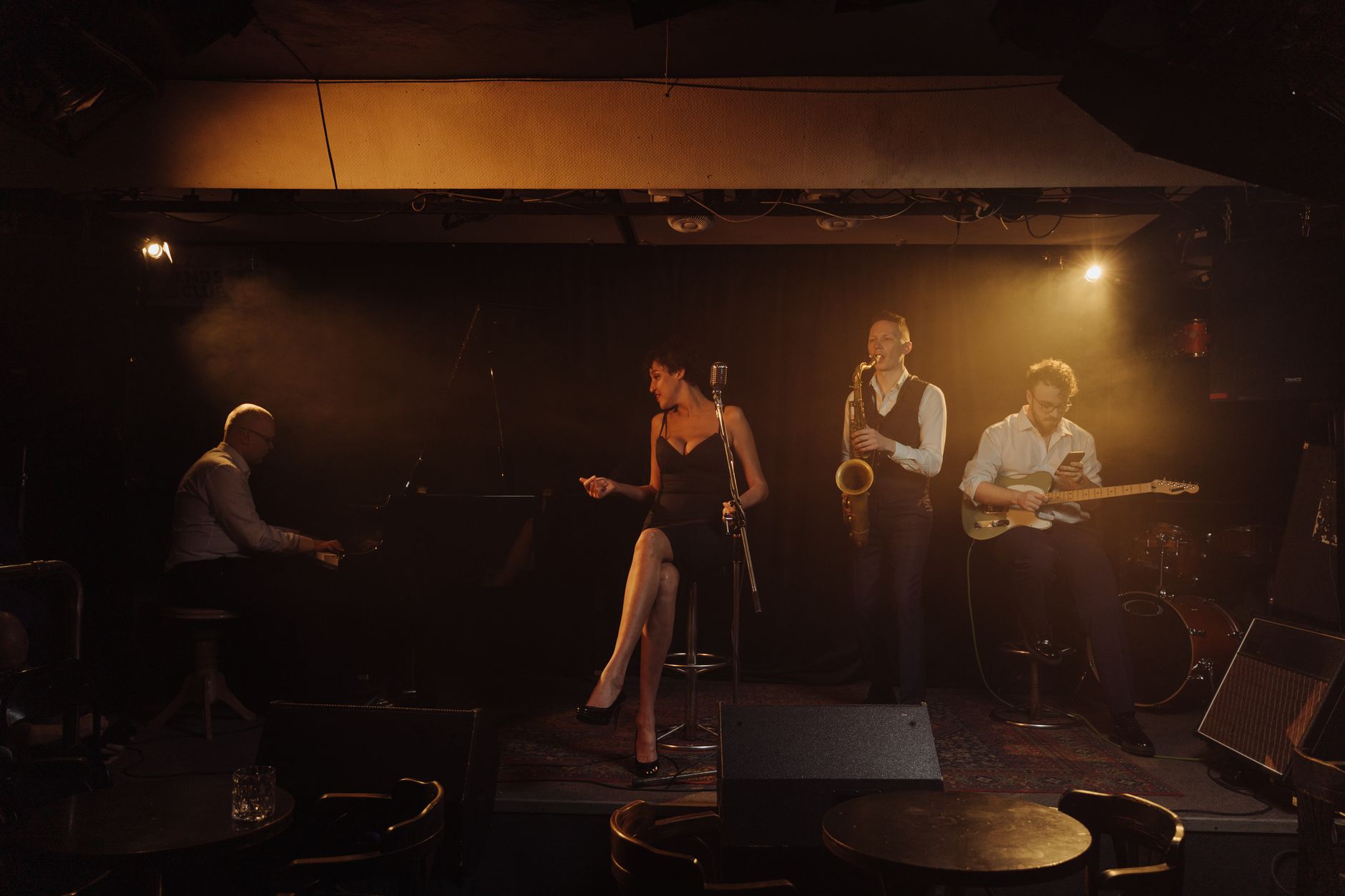
An indie band from Cardiff with nearly twenty years of history played eleven North American dates in 2024. Los Campesinos! sold 12,687 of 12,787 available tickets, a 99.2 percent sell-out rate, with only one date falling short of capacity. By any visible measure, this was a successful tour.
Then they published their accounts.
Their shows ran on the guarantee-versus-percentage model that most touring artists use. Each night the band was guaranteed a minimum fee for performing, ranging from $5,000 to $17,000 depending on the market. Because nearly every seat sold, they triggered the overage clause in each contract, earning a bonus above the guarantee when ticket revenue crossed the agreed threshold. Total performance income across the eleven dates came to nearly $150,000.
The bills arrived next. Eight band members plus their sound engineer each needed a P-1 artist visa to enter the United States. Visa applications, attorney fees, and courier costs came to more than £5,000. Eleven round-trip international flights, carrying instruments, technical equipment, and baggage for the full traveling party, which included two children of a band member and a childcare provider for the tour, exceeded £7,000. Pre-tour costs alone, before the first note was played, crossed £15,000.
North American distances make a van impractical for a band of their size carrying a full merchandise inventory. They hired a sleeper bus, with the band resting between cities as the driver covered the miles overnight. The bus, including fuel, driver fees, and dead travel days when the route required long repositioning legs, cost more than £45,000.
Hotel rooms for the nights the bus was not an option, backline rental, consumables, a tour accountant for US tax compliance, crew per diem, and the cost of staffing a merchandise table across eleven cities brought total tour expenses to just over £100,000. Net income from ticket revenue after commissions and deductions: £99,700. The band that sold out eleven shows lost roughly £2,000 on tickets before a single t-shirt was sold.
Selling out is a great photo and a real milestone. In a spreadsheet, it can tell a different story.
Why live performance is the economic center
The Los Campesinos! numbers illustrate something that gets lost when the conversation about concert prices focuses only on stadium tours and three-digit tickets. Live performance is not a promotional extension of recorded music for most working artists. It is the job. Streaming builds awareness and keeps catalog circulating, but the moment money actually changes hands, for most artists at most career stages, is at the door of a venue.
This holds across the full range of artist scales. The act filling a 200-seat club needs the door to pay the sound engineer, the petrol, the accommodation, and the instrument hire. A mid-level touring band crossing an ocean faces the same equation at a larger scale. The cost structures change, the risks multiply, but the dependency on live income stays constant from the smallest club to the largest arena.
Post-pandemic touring made this harder. When live music stopped, costs did not. When shows resumed, they resumed into higher transport costs, increased venue hire rates, more expensive insurance, and labour that had repriced across every market. Audiences came back with expectations raised by years of watching high-production content at home, which pushed up the bar on what a live show should look and feel like. A larger stage setup requires more trucks, more crew, more hours of load-in, and a break-even point that sits further from where it was before 2020.
The result is a market where the expectation of what a live show should deliver has risen while the cost of delivering it has also risen. An artist who toured the same production in 2019 and again in 2024 is not playing to the same economic conditions, even if the setlist is identical.
How a ticket price is actually built
The figure a fan sees during checkout is the compressed output of weeks of calculation, sometimes months. The process does not start with a question about what the market will accept. It starts with a question about what the show costs to exist.
Two inputs drive the number. First, what the artist needs to earn per night for the tour to make economic sense. Second, what it costs to produce the specific show at the specific venue in the specific city on the specific date.
The artist's guarantee is not the artist's salary. It is a pool covering musicians, touring crew, production staff, hotel rooms, per diem, pre-tour rehearsals, and travel. A three-piece band in a van requires a different pool than a nine-person touring party with a sleeper bus and a dedicated merchandise handler. Both pools must be filled before anyone takes a margin home.
The promoter, who typically shoulders the direct financial risk of the event, calculates separately: venue hire, local crew, security, ticketing platform fees, insurance, permits, advertising, catering, and load-in logistics. These shift substantially by venue type. A club with a permanent sound system and bar operation has infrastructure already running. An outdoor site or a large arena may require building everything from scratch, including the stage structure, the rigging, the power supply, and the video screens.
Both sets of numbers feed into a break-even calculation. The ticket price is the mechanism for reaching it. Below the break-even, everyone loses. Above it, the surplus flows according to the terms agreed in the performance contract. Three factors shape where the final price lands.
- Cost: what does it take for the show to exist, covering the artist's touring party, the promoter's production expenses, and the venue's own operating requirements
- Demand: how many people want to attend, at which price they will actually buy rather than just browse, and how that interest varies by city and date
- Perception: whether the price feels proportionate to the artist, the venue, and the experience the fan expects to receive
When all three are in balance, the price holds. When one pulls out of step, problems start. A show where costs are high but demand is soft cannot sustain itself. A show where demand far exceeds the price set creates a gap that resellers fill. A show where the price feels misaligned with the experience generates the kind of reaction on social media that follows an artist into the next announcement.
Most shows offer multiple price points rather than a single ticket price. General admission, reserved seating at different distances from the stage, premium zones with better sight lines, and sometimes experience packages layered on top. The average price across all tickets sold matters more than the price of the most expensive option. A show might have a small premium allocation at high prices alongside a large pool of general tickets at modest prices. The number that travels furthest on social media is rarely the median ticket price.
Routing, venues, and why some cities fall off the schedule
A tour is announced as a single entity, a run of dates with a title and a poster. Economically, each date is its own operation with its own variables. Two cities in the same week can carry completely different cost structures.
One city might have a promoter with strong local knowledge, a venue already familiar to the artist's audience, and a routing that requires no wasted travel days. Another might require pulling the entire production hundreds of miles off course for a single night, adding hotel costs, driver hours, and fuel to a budget that may not sustain it. The Los Campesinos! sleeper bus cost exceeded £45,000 partly for this reason: North American touring distances leave no cheaper alternative for a band of their size.
This is why some cities disappear from tour schedules that fans expected to see included. The absence is not always about whether fans exist in that city. It is about whether the logistics of reaching them make economic sense within the wider tour structure. If the routing requires a two-day detour for a single date, and the available venue does not match the expected demand, the date does not get booked.
Venue choice is itself a financial decision. A smaller room that sells out carries controlled costs and limited risk. A larger venue multiplies potential income and potential exposure in equal measure. The step from a theatre to an arena brings more ticket capacity alongside more production crew requirements, heavier security, higher venue fees, a bigger advertising commitment, and a wider gap between a sold-out night and one that comes in short.
Some artists choose a room that functions as a public statement about where their career is positioned, even when the margin on that date is thin. Playing a well-known venue generates press and raises the prices achievable in future festival negotiations. The date may not be the profitable one in the run. It can still be the correct call, understood as an investment in the next cycle of bookings.
What the resale market actually reveals
When tickets sell out in minutes and immediately reappear on secondary platforms at two or three times the face value, that gap is not just frustrating for fans who missed the sale. It is a signal about demand calibration.
A large resale premium means some portion of the audience was willing to pay more than the official price. It means the primary price may have been set below what the demand could have supported. And it means the distance between what the fan paid and what the ticket is worth to them on the open market was captured by someone outside the event economy: not the artist, not the promoter, not the production crew.
This is the core argument for dynamic pricing, adjusting ticket prices in real time based on how demand is moving. If the gap between face value and resale value is large, the logic runs, that difference should stay inside the event rather than benefit a third party. Airlines and hotels have operated this way for years without generating comparable controversy.
The friction in music is relational. A fan who joined a mailing list, secured a pre-sale code, waited in a virtual queue, and then watched the price increase before completing the checkout does not experience that as market efficiency. It registers as a change in the terms of the relationship. The economics may be defensible. The feeling is not always compatible with the loyalty that sold-out shows depend on.
Pre-sales and fan codes exist partly to manage this tension. Giving queue priority to the fan club, the mailing list, or the SMS subscriber rewards the most connected part of the audience and provides the touring team with early data on how demand is behaving before the general sale opens. If the pre-sale moves faster than expected, that tells you something about pricing for the general pool. If it stalls, that tells you something too.
The practical limitation is that codes circulate outside their intended audience and automated purchasing tools operate faster than human buyers. Pre-sale systems are filters, not barriers. Professional resellers have adapted to every version of them introduced over the past decade.
When the merchandise table saves the tour
The ticket revenue shortfall on the Los Campesinos! tour was covered by the merchandise table.
Across eleven shows, the band sold 2,266 t-shirts and generated approximately $112,000 in total merchandise income, around £88,600. After manufacturing costs, vinyl production, card processing fees, and handling for mail orders, the net from merchandise was enough to convert the tour's overall result from a small loss to a profit of roughly £38,000.
That profit did not divide among seven band members and walk away. The band described reinvesting it in future recordings, manufacturing costs for the next product run, and advance expenses for the next tour, where visa applications and international flights need paying before the first show earns a pound.
The merchandise story works for Los Campesinos! because specific conditions were in place. Nearly two decades of catalog gives the audience a reason to buy. A design approach that makes the merchandise worth owning outside the show context matters. A community that has followed the band long enough to feel the kind of attachment that drives that volume of purchase is not replicable on a shorter timeline.
An artist six months into their career cannot model their touring finances on the Los Campesinos! numbers. A devoted audience built over two decades, a back catalog that fans want to own on vinyl, and merchandise with a design identity worth buying regardless of whether you attended the show are the variables that made that income possible. The general principle holds: merchandise matters. The specific numbers do not transfer.
Not one venue on that tour charged a merchandise cut. Many venues take between ten and twenty-five percent of an artist's merchandise revenue as a condition of selling in the building. Had those cuts applied across eleven dates, the margin that saved the tour budget would have been substantially smaller, and the final result would likely have been a loss regardless of how many shirts were sold.
The band also chose not to offer VIP packages, tiered access experiences, or meet-and-greet upgrades. They declined because they did not want to create divisions within their fan base. That position cost them income they could have generated. It also preserved something they considered more important than the income.
The price that has to work on both sides
A fan sees one number on a screen and decides in seconds. That number is the compressed output of decisions that started months earlier, when someone committed to venue deposits and visa applications before any ticket had been sold.
Pricing too low fills the room but may not cover the bills. Pricing too high protects the margin but risks alienating the audience or, in a market with strong demand, pushing buyers toward resellers who capture the difference. Setting the price without accurate demand data risks either leaving money behind or overstating what the market will support.
Los Campesinos! set their standard ticket at $27.50 and reserved five percent of tickets at $10 for fans with lower incomes. Those choices reflect a particular view of who should have access to the room and what the relationship with the audience is worth in practice. Raising prices would have increased tour income. It would also have changed the composition of the room, and the conversation around the band.
The fan sees a number. Before that number there were weeks of spreadsheets, calls between agents and promoters, production decisions that moved the break-even point ten or twenty dollars in either direction, and conversations about which cities the routing could justify and which ones, despite having fans, it could not.
The price has to work on both sides. If it only works in the budget but the audience pushes back, the next tour is harder to book and harder to sell. If it only works for the audience and does not cover the costs, there may not be a next tour.
What the Los Campesinos! case offers is rare transparency into a calculation that most artists keep private. A 99.2 percent sell-out rate is a great photo and a meaningful milestone. In a spreadsheet, it can tell a different story. The touring economy is built on that gap between what is visible and what the numbers actually say, and the ticket price is where both sides of that conversation meet.