
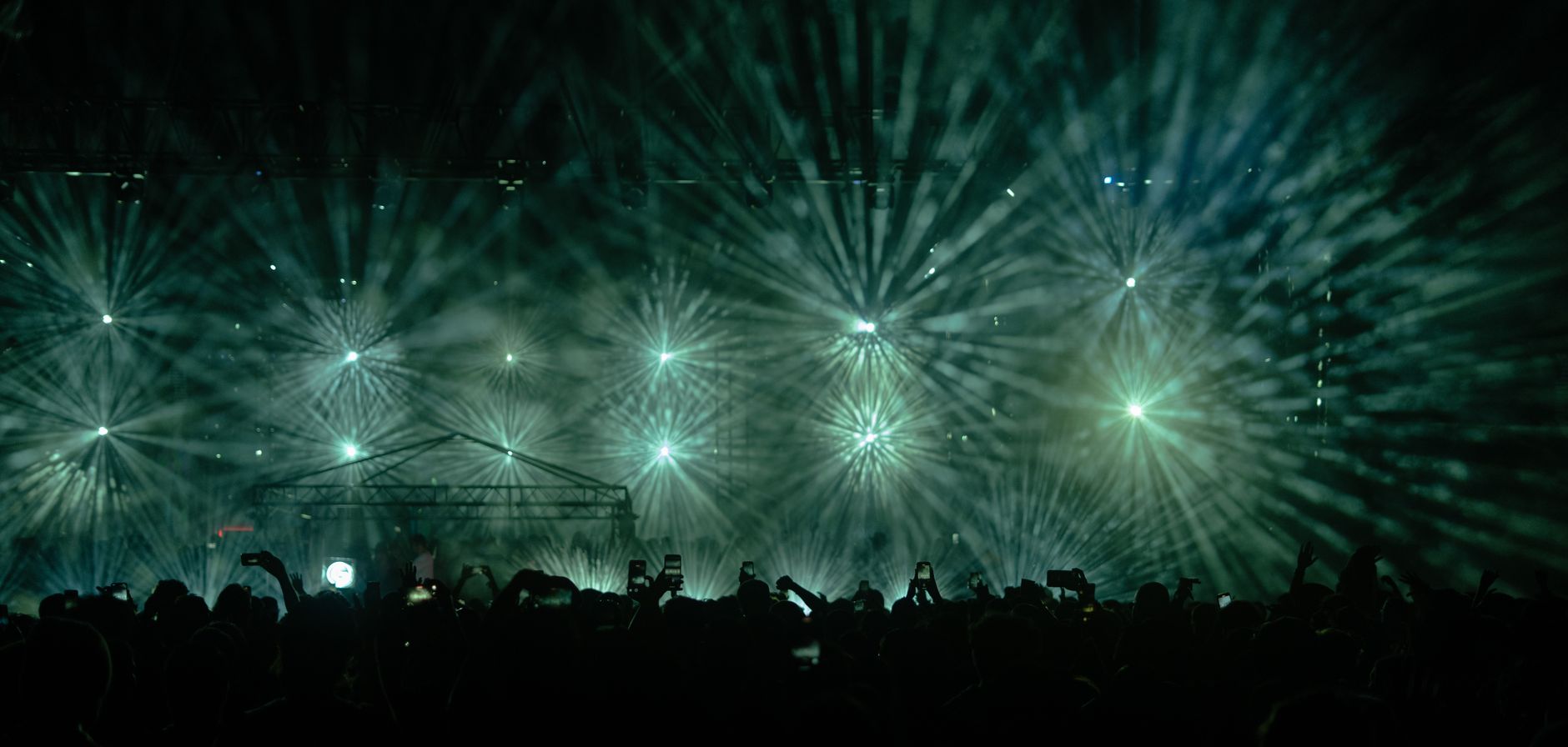
Waka Waka (This Time for Africa) hit in 2010 and became a category of its own. Hundreds of millions of people heard it at the same moment in history. You probably know where you were. That feeling is real. The planning behind it is equally real, and understanding both changes how you think about what music can do by design and what it cannot.
Shakira's formula, written in plain sight
Shakira is the only artist to have written three official World Cup songs. Look at how each one was built and the pattern becomes obvious. For South Africa 2010, she took a song built on Cameroonian marching rhythms and recorded it with Freshlyground, a South African group. For Brazil 2014, she brought in Carlinhos Brown and the batuque tradition. For 2026, she went to Lagos and recorded with Burna Boy, one of the biggest names in Afrobeats.
This is not musical curiosity. Nigeria has grown into one of the largest music industries in the world by streaming volume, with growth since the pandemic that few other markets can match. Pairing a global name with a regional artist who already owns that territory opens a door from both sides.
FIFA's logic, stated plainly: pop universalism on top, local market below. What you experience in a stadium as a shared emotional moment is, on paper, a map of territories.
Every one of those pairings requires agreements before a note is recorded: splits on the songwriting, licenses on the master, terms covering what each party can do with the track afterward. When one writer is in Lagos and the other is in Miami, those documents need to work in both places. Musilock generates bilingual music contracts for exactly this kind of cross-border collaboration and sends them for e-signature.
Unofficial songs outlast official ones, almost every time
England 1990. The Football Association needed a World Cup song and, instead of commissioning the usual chorus of players singing in unison, gave the brief to New Order, who came from Joy Division and were the most credible club music act in the country at that moment. The result was World in Motion, still the only UK number-one single in New Order's entire career.
What made it work was not the brief. The original title was rejected because it referenced tabloid culture too directly. The lyrics were full of double meanings that slipped past the association unnoticed. The rap from John Barnes came out of an improvised battle between the players, with some alcohol involved. The song connected because it was imperfect and sounded like it came from a real place.
A parallel case, from the European Championship rather than the World Cup: Three Lions, recorded for a tournament played in England in 1996. Rather than commissioning players to perform, the FA brought in two comedians who represented the fan's perspective. The creative choice that made it last was to write a song about losing, about decades of failure and the specific bittersweet feeling of following England. The track is the only song in UK chart history to reach number one four separate times with the same lineup. Opposing fans have sung it against England. Germany's squad was reportedly humming it on the walk to the stadium the day they knocked England out on home soil.
The pattern is the backbone of this whole argument. The football songs that get played at someone's wedding twenty years later almost never came from the official FIFA brief. They came from below, attached to a real scene, a concrete cultural moment, and an emotion nobody had budgeted for.
For 2026, FIFA replaced one official song with eighteen
The 2026 World Cup album, released through FIFA Sounds, brought together artists from across the globe, including Burna Boy, Carin León, Anita, Rema, Alejandro Fernández, and others spanning multiple continents and genres. The stated ambition was the most wide-ranging World Cup album ever made.
Beyond the album there were concerts in Mexico, Toronto, and Los Angeles, opening ceremonies across all three host countries, and, for the first time in any World Cup final, a halftime show at MetLife Stadium on July 19, curated by Chris Martin of Coldplay, with a lineup that included Madonna and Shakira.
The reference model is the Champions League kickoff show, which has grown into a serious production over the past decade. Camila Cabello's 2022 pre-match appearance reportedly reached more than 166 million television viewers. The Champions League final now draws a global audience that approaches the Super Bowl's numbers. FIFA took that format and applied it to a competition with a larger worldwide footprint.
Each collaboration on that album is a market-access deal
Every pairing on the album follows the same structure. A global artist brings reach and a recognized name. A regional artist brings an authentic local sound and, more usefully, direct access to their community and their streaming market.
When Carin León appears on the album, he is there because Regional Mexican music already fills stadiums across the United States on its own. The genre does not need FIFA's stamp. What the pairing does is accelerate the crossover in both directions: his listeners find the wider project, the wider project finds his listeners. Each name on that tracklist represents a territory. Each local sound is a door into an audience that a global pop act cannot reach by singing in English alone.
This mirrors what is happening across the streaming industry as a whole. Popularity is no longer a single highway. It is a map of separate territories, each with its own audience. Eighteen World Cup songs for eighteen markets is not a FIFA quirk. It is an accurate description of how music finds its listeners in 2026.
The music also does reputation repair
This World Cup followed Qatar 2022, which drew sustained attention to stadium construction conditions. The 2026 halftime show was organized in partnership with Global Citizen, with proceeds directed to an education fund with a stated goal of raising 100 million dollars for children in vulnerable situations. A concert tied to educating children generates a different kind of press than the one it displaces.
The pattern holds across recent tournaments. Russia 2018 carried significant geopolitical pressure. Qatar 2022 had the construction controversies. For each difficult backdrop, FIFA expanded its musical program. In 2030, the World Cup spreads across six countries on three continents. In 2034, it goes to Saudi Arabia alone. The music, at this scale, is not decoration. It is the narrative running alongside an expanding commercial and geopolitical footprint.
The fifteen-minute window exposes what cannot be manufactured
A football match has a fifteen-minute halftime break. That is a rule of the game, not a FIFA preference. A Super Bowl halftime show has thirty minutes or more to build and clear a full stage. The World Cup final does not. Madonna, Shakira, and a full concert production had to perform, build, and clear within a window that the sport does not want to give up.
This is the whole situation in miniature. FIFA can book the biggest names on the planet, secure the most elaborate stage design, and distribute eighteen tracks across every continent. What it cannot schedule is the coincidence that turned Waka Waka into something people still hear in traffic. That song worked partly because it arrived alongside the first World Cup ever held in Africa, accompanying a moment rather than designed on top of one.
The engineering is visible. Visible engineering can do a great deal. What it cannot buy is permanence.
Your local sound is now the thing worth buying
For years, working in a local language or from a specific regional scene felt like a ceiling. The unspoken advice was to sand those edges down, sing in English, sound more international. Reggaeton ignored that advice. Afrobeats ignored it. Regional Mexican ignored it. Each one built an audience so specific and so committed that the global industry eventually came looking.
The collaborations on this FIFA album are not proof that local sounds finally got noticed. They are proof that local specificity has become the most valuable thing to buy. A strong regional sound is now the negotiating chip, not the obstacle.
An artist from any scene, singing in any language, who has built real roots in a community, carries something that cannot be manufactured from above. FIFA spent more on this World Cup's musical program than on any previous tournament, trying to manufacture exactly that connection. The songs that still get played in 2041 will probably be the ones nobody planned.
If you are building a collaboration right now, even one between two people with no budget, get the paperwork done before the moment passes. Musilock exists because the split sheet conversation almost never happens during the session. The one that does not happen is the one that causes the dispute two years later.