
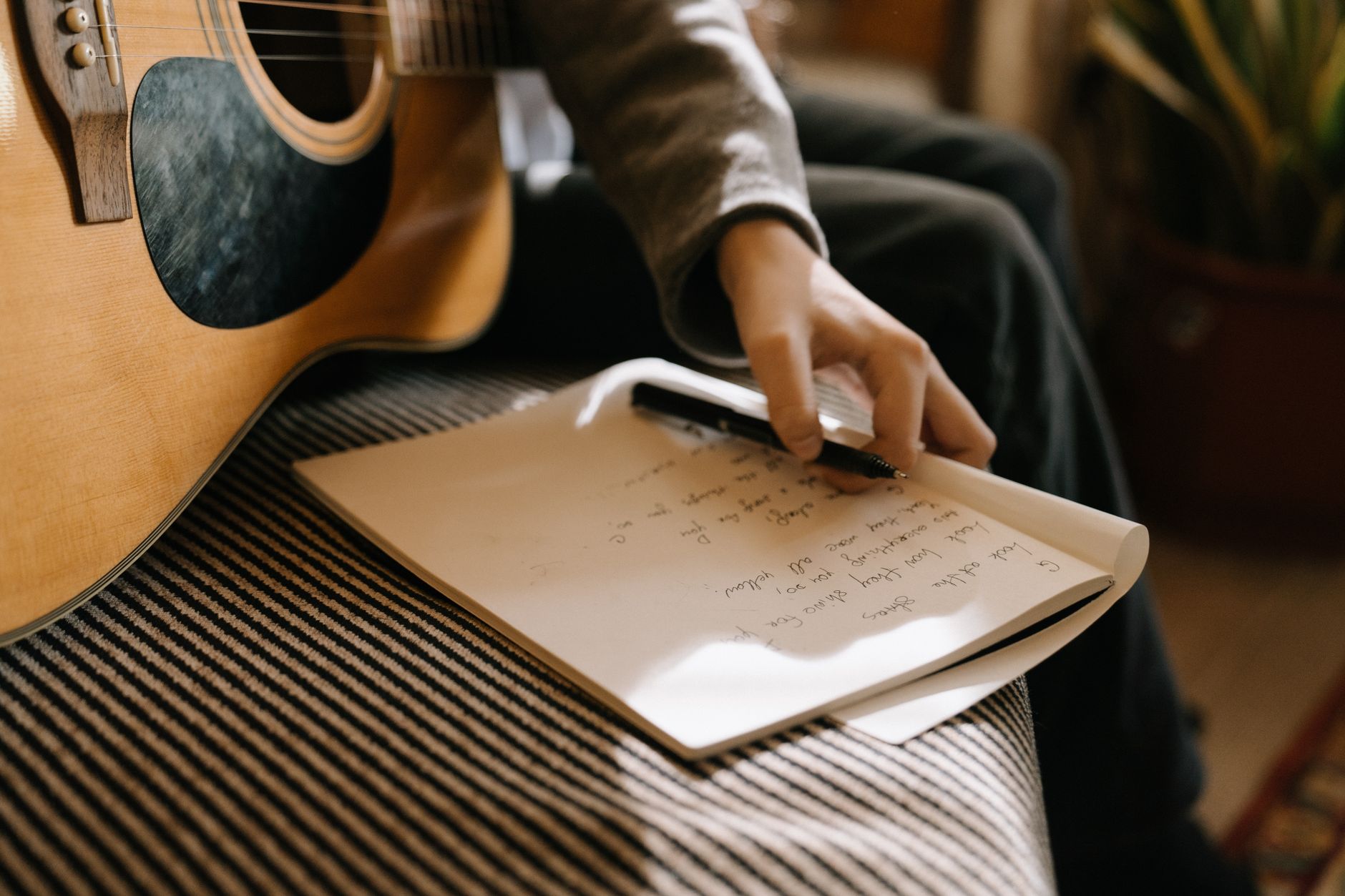
Picture two co-writers who finish a song on a Sunday night. One of them runs the final mix through an AI tool to clean it up. A week later the other finds out and is furious. The song did not change. What changed is that they never agreed on what counts as AI.
The fix is dull, and it works. Before you release, write down which tools touched the song, what each one did, and what every co-writer agreed to. Then sign it. A written collaboration agreement is the place for that. Musilock generates one in English and Spanish and sends it out for e-signature, so the conversation happens before release day instead of after.
A lot of young creators distrust AI, so assume your co-writer might
People who work with creators between roughly 18 and 25 report a sharp reaction whenever the topic comes up. Plenty of that age group use AI tools happily. A good share do not, and some are repelled by the whole idea.
Their worries are specific. Songs generated from a prompt. Their own music feeding the models. Being copied. Tech companies that seem to take more than they give. You do not have to share those worries to respect them. If you co-write, your partner may hold every one of them.
'AI' covers very different things, so 'no AI' needs a definition
Ask a room of musicians whether using AI on a song is wrong and you will get a firm yes. Then change the example and the room splits. Here are three cases that all get called AI:
- A whole song generated from a text prompt.
- A song written and played by humans, then polished with an AI mixing tool.
- A software instrument that offers several ways to play chords you already chose.
Most people who object to the first case shrug at the second. Some say the mix tool just saves time after the human work is done. Others say it is still AI. The third case barely registers, because the instrument is not labeled as AI, even though it generates parts for you.
So two people can both say 'I don't use AI' and mean opposite things. That gap is where the fight Sunday night comes from.
Agree the rules before the session, not after the release
You do not need a long document. You need clear answers to a few plain questions, written down and signed by everyone on the song:
- Which tools may be used while writing, recording and mixing.
- What happens if someone wants to add a new tool later.
- Whether anyone's voice or playing may be used to train or copy a model.
- Whether any co-writer can ask for a version released without a given tool.
Some co-writers will say no to every AI tool. Others will say yes to a mixing assistant but no to anything generated. Both answers are fine. The point is that the answer is on paper before money, streams or a sync offer make everyone's memory more flexible.
Your voice and playing deserve their own line in the agreement
The fear of being replicated comes up again and again among younger creators, and it is a reasonable one. A singer who records a vocal on a shared track may not want it used to build a voice model. A session guitarist may not want their playing copied.
If that matters to you, say so in the agreement. A clear no is a perfectly good term. So is a clear yes with conditions you set. What does not work is silence, because silence leaves each person guessing what the others assumed.
The rules on AI and music are still moving, and they differ from country to country. For a song with serious money behind it, ask a lawyer about the current position where you live.
Training data and sampling show why undocumented use comes back later
Music used to train AI models, with or without permission, is in the news constantly. Several companies in Europe are working with publishers, songwriters and legal teams on ways to trace which works shaped a generated song. The idea is to give those writers a small share of it. That work is early, and nobody can say yet how it will turn out.
Sampling offers a useful comparison. You were supposed to get permission to sample, and plenty of people never did. Now software can scan old tracks and spot samples nobody cleared. Use that was never recorded does not stay hidden forever.
The lesson for a working songwriter is simple. If a generated element ends up in your song, note the tool, the date and what it produced. Future you, or a future buyer, will want that note.
Keep percentages on the split sheet and the AI rules in the agreement
A split sheet says who owns what share of a song. It does not say how the song was made or what each person was comfortable with. Keep the two jobs apart.
Sign the split sheet to fix the percentages. Sign the collaboration agreement to fix the working rules, including the tools. Together they answer the two questions that cause the worst arguments: who gets paid, and what did we agree to?
You can disagree about AI as long as the paper is honest
You will not talk a wary co-writer into liking these tools, and you should not try. Pushing someone to accept a technology rarely works. Some writers will walk away from a song that used generative tools. Better that they find out at the start than the week before release.
Tell them what you plan to use. Ask what they will accept. Write down the answer, and let everyone sign it. That is the reason Musilock puts a collaboration agreement in front of both people before the song goes out.