
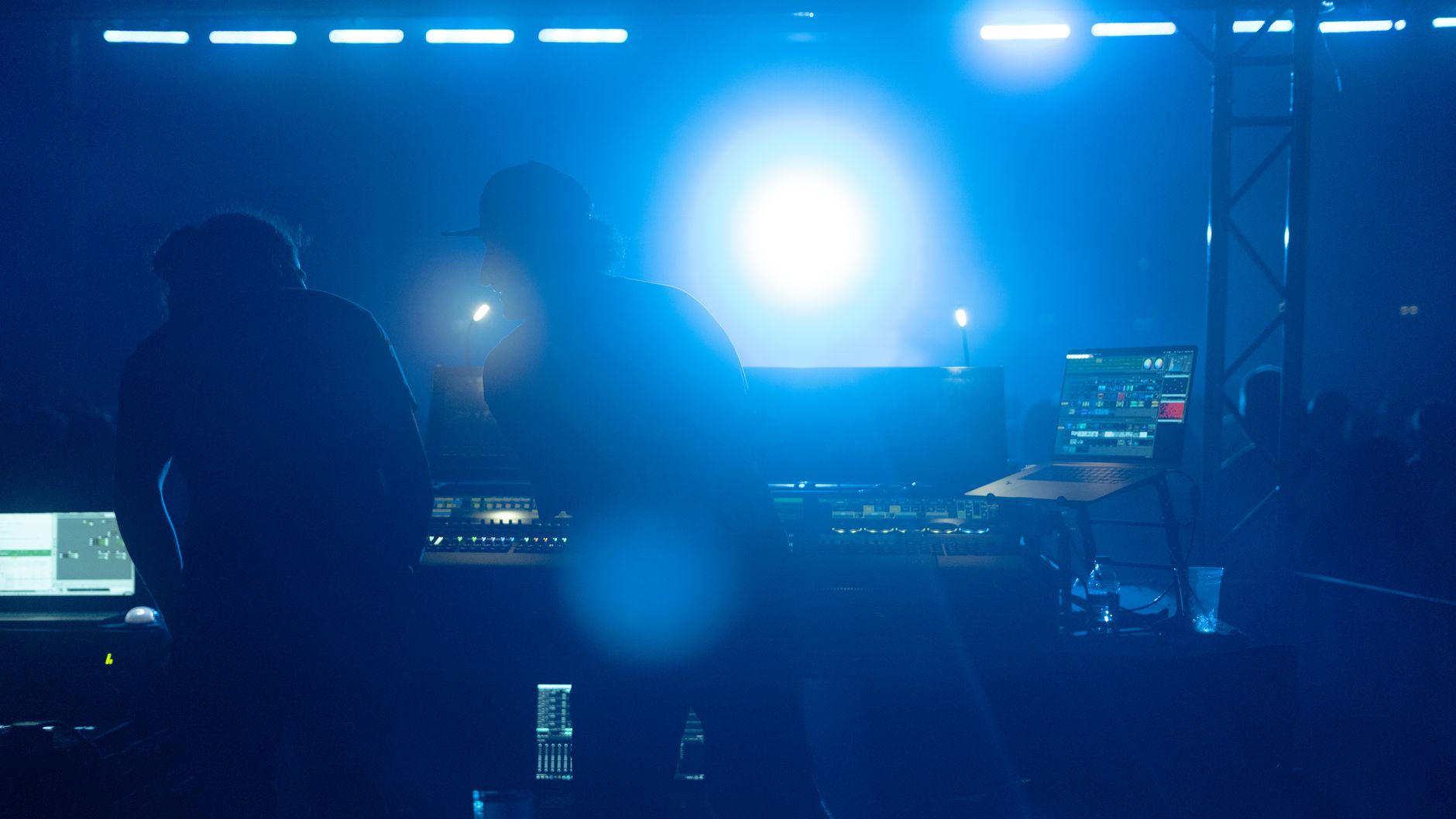
Bad Bunny chose the Metropolitano de Madrid for ten consecutive nights. Shakira built a temporary stadium designed by architecture firm BIG for twelve shows in the same city. Radiohead announced it would limit its concerts to rotating residencies by continent instead of 70-date tours. The pattern is the same: one artist, one venue, several nights in a row. And the reason that format makes economic sense is directly tied to how the relationship with audiovisual production changes.
On a conventional tour, you build and tear down the production in every city. The cost of lighting, stage design, video systems, and technical crew repeats 40, 50, 60 times. At a residency, you build once and spread that cost across every show. That difference turns audiovisual production into the central business asset. Musilock exists precisely because that asset, far too often, goes without a written agreement to protect it.
Large-scale tours reached a point where revenue grows, but costs grow at the same rate or faster. Tours that grossed record-breaking numbers ended up with per-show margins far tighter than the headline figure suggested. That is not a single artist's problem, it is a feature of the conventional tour model pushed to its limit. The residency is a direct answer to that pressure, and that answer puts audiovisual production at the center of everything.
Production stops being support and becomes the product
When you take the same show to forty different cities, the production shifts with every venue, acoustics, stage size, available technology. There are inconsistencies you cannot avoid. At a residency, the technical crew works from the same place, with no travel, and can refine the show every night. What starts as a first draft becomes something considerably more polished by the final performance.
That refinement process has concrete economic value. The lighting design the technician optimized night after night, the generative video files the visual artist kept tuning, the stage map that landed perfectly for that venue, all of it is an asset that grew through someone else's work. If there is no contract defining who owns it, whoever created it can walk away with it when the run ends.
If your show design improved every night across six performances, you end with something valuable. The question is whether that something belongs to you.
Without an agreement, the person who designs your show can keep what they created
Verbal agreements work while everything is going well. When the lighting designer from your five-night residency posts show footage to their social media to attract new clients, your face, your music, your brand, a verbal agreement does not protect you. When the visual artist sells the same visuals package to another artist in your city two months later, a verbal agreement does not protect you then either.
There is an even more common scenario: the designer walks out with the original files because nobody specified who owned them. Months later, you want to reproduce the show in another city. You do not have the files. You either pay again for something you already paid for, or you start from scratch.
An audiovisual services contract is not the same as an invoice. The invoice confirms that the work was paid for. The contract defines who has the right to use the result of that work, under what conditions, and for how long. When the show is the product, that distinction can be the difference between owning your show and not owning it.
Four things your audiovisual services agreement must cover
- File ownership: lighting programming files, video stems, and all final materials must be in your hands when the work ends. Specify the format and the delivery deadline.
- Usage rights for each party: the designer can show the work in their portfolio, that is reasonable. Define what they can show, when, and with what credit, without that affecting your control over commercial use.
- Temporary exclusivity: if you pay for a design built around your show, it is reasonable to ask that the same design not reach an artist in your genre or city in the months that follow.
- What happens if a show is canceled: put in writing whether the provider charges in full, charges proportionally, or does not charge when a night falls through due to circumstances outside your control. Settling that question in the middle of a crisis is the worst time to do it.
The model applies even if you are playing three nights in your own city
Major artist residencies are the most visible example, but the logic applies at any scale. If you put together a three-night weekend at the same club with a specialty lighting designer, a visuals projectionist, or a video technician hired for those dates, you are in the same situation. Whoever created something for your show holds rights to it unless an agreement says otherwise.
The difference between a ten-night residency at the Metropolitano and three nights at a club in Medellín, Mexico City, or Santiago is not the legal logic. It is the budget. In both cases there is a creative who worked on your project, and the result of that work needs a clear owner from day one, not from the first day something goes wrong.
Major artists have legal teams that sign contracts before the first cable is connected. For everyone else, Musilock generates that agreement in bilingual format and sends it for digital signature. The audiovisual services contract closes that gap before the show starts.